
If you’re wondering how to get pre-approved for a mortgage in Canada, you’re already taking one of the most important steps toward buying a home. A mortgage pre-approval gives you a clear understanding of what you can afford, helps you lock in an interest rate, and puts you in a stronger position when making an offer.
Instead of guessing your budget or relying on rough estimates, getting pre-approved allows you to make informed decisions from the start, especially when you work with a mortgage broker through Mortgage Alliance, who can compare multiple lenders and guide you through the process.
What you’ll learn:
- What mortgage pre-approval really means (and what it doesn’t)
- How lenders calculate what you can afford
- What documents you’ll need to prepare
- How to avoid common mistakes that can impact approval
- What happens after you’re pre-approved
What Mortgage Pre-Approval Really Means
A mortgage pre-approval in Canada is a conditional commitment from a lender that estimates how much you can borrow based on your financial profile. It’s based on a review of your income, credit, debts, and down payment, but it’s not a final guarantee.
What a Mortgage Pre-Approval Includes
- A review of your income and employment
- A credit check
- An estimate of your maximum purchase price
- A rate hold (usually 60–130 days)
This gives you a realistic price range so you can shop with confidence.
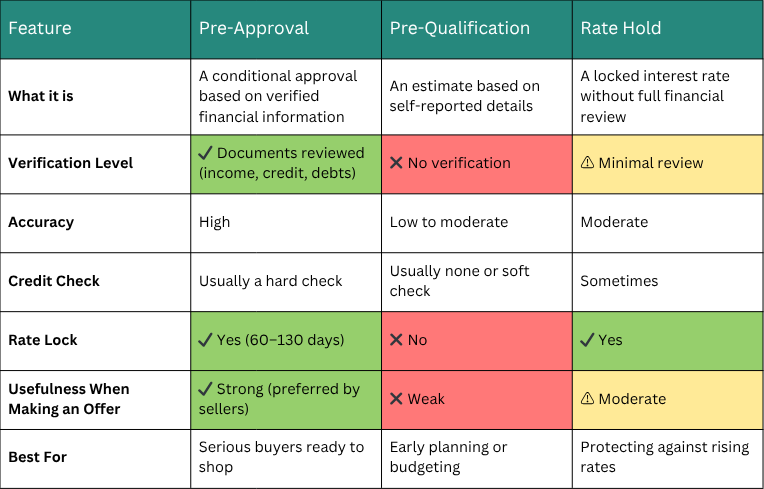
Mortgage Pre-Approval vs Pre-Qualification vs Rate Hold
- Pre-approval: Verified information + strongest estimate
- Pre-qualification: Quick estimate based on what you report
- Rate hold: Locks in a rate without fully reviewing your finances
Pre-approval is the most reliable and widely used option when preparing to buy.
Understanding the difference between mortgage pre-approval vs pre-qualification can help you choose the right starting point.
Why Pre-Approval Is Not Final Approval
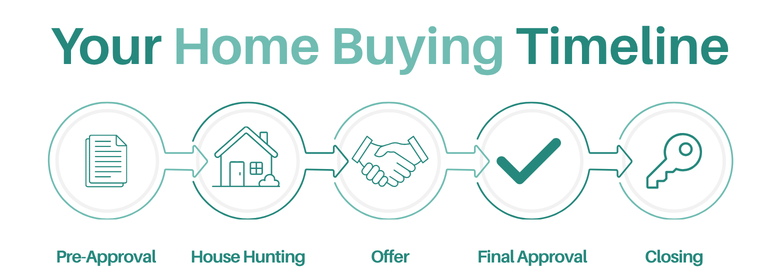
Even after you’re pre-approved, your mortgage must go through a final review once you’ve chosen a property. The lender will:
- Evaluate the home (appraisal, condition, location)
- Reconfirm your financial situation
- Review any changes in credit or employment
Why Getting Pre-Approved Matters
Getting pre-approved isn’t just a checkbox, it helps you move through the home buying process with clarity and confidence.
- Know your budget: You’ll understand exactly what price range is realistic
- Lock in a rate: Protect yourself if interest rates increase
- Strengthen your offer: Sellers are more likely to take your offer seriously
Without pre-approval, buyers often face uncertainty, delays, or missed opportunities.
When to Get Pre-Approved
The best time to get pre-approved is before you start seriously looking at homes. This ensures you’re ready to act when you find the right property.
Most pre-approvals in Canada are valid for 60 to 130 days, depending on the lender.
What Happens If It Expires
If your pre-approval expires before you purchase:
- You’ll need to update your documents
- A new credit check may be required
- Your rate or approval amount could change
How Much Can You Afford? (GDS, TDS & Stress Test)
Lenders determine affordability using GDS and TDS ratios in Canada, along with the mortgage stress test.
What Is GDS (Gross Debt Service)?
GDS measures how much of your income goes toward housing costs:
- Mortgage payments
- Property taxes
- Heating
- Condo fees (if applicable)
Most lenders prefer this to be 39% or less of your income.
What Is TDS (Total Debt Service)?
TDS includes all your debts:
- Housing costs
- Credit cards
- Car loans
- Student loans
Most lenders look for a TDS of 44% or less.
How the Stress Test Impacts You
In Canada, you must qualify at a higher rate than your actual mortgage rate. This is called the mortgage stress test, and it ensures you can still afford your mortgage if rates rise.
You’ll need to qualify at:
- Your rate + 2%, or
- A benchmark rate (often around 5.25%), whichever is higher
This can reduce your maximum approval amount, but it protects you financially in the long term.
What Lenders Look At
Understanding mortgage approval requirements in Canada can help you prepare ahead of time and avoid surprises.
Income and Employment
Lenders want to see:
- Stable, consistent income
- Reliable employment history
Credit Score and History
Your credit profile shows how you’ve managed debt:
- Higher scores improve approval chances
- Missed payments or high balances can impact your results
Debt Levels
Your existing debts directly affect how much you can borrow.
Down Payment
Your down payment must:
- Meet minimum requirements
- Be clearly documented
Documents You’ll Need
Preparing your documents early can make the process much smoother.
Mortgage Pre-Approval Documents Checklist:
- Proof of income (pay stubs, tax documents)
- Employment verification
- Government-issued ID
- Bank statements
- Down payment confirmation
Additional Situations
- Self-employed: tax returns, business financials
- Newcomers: savings history, alternative credit
Download your complete checklist to stay organized during your pre-approval.
Down Payment and Source of Funds
Your down payment is a critical part of your mortgage application.
Minimum Down Payment in Canada
- 5% on the first $500,000
- 10% on the portion above $500,000
- 20% for homes over $1 million
Gifted Down Payments
Gifted funds are allowed, but must:
- Come from an immediate family member
- Be supported by a signed gift letter
- Be traceable in your account
Verifying Your Funds
Lenders typically require:
- 90 days of bank statements
- Explanations for large deposits
How to Get Pre-Approved (Step-by-Step)
- Check your credit score
- Review your finances and budget
- Gather your documents
- Connect with a mortgage broker
- Submit your application
- Receive your pre-approval
Common Mistakes to Avoid
Even small changes can impact your approval:
- Taking on new debt
- Changing jobs
- Missing documentation
- Making large unexplained deposits
Keeping your financial situation stable is key.
What Happens After You’re Pre-Approved
Once pre-approved, you can:
- Shop for homes within your budget
- Make offers with confidence
- Move toward final approval after selecting a property
Your lender will complete a final review before funding your mortgage.
Work With a Mortgage Alliance Broker
Working with a Mortgage Alliance broker gives you access to multiple lenders and expert advice throughout the process.
- Compare options across lenders
- Avoid unnecessary credit checks
- Get guidance tailored to your situation
Frequently Asked Questions
What is mortgage pre-approval in Canada?
A mortgage pre-approval is a conditional approval that estimates how much you can borrow based on your financial profile.
What’s the difference between pre-approval and pre-qualification?
Pre-approval involves verified financial information, while pre-qualification is a basic estimate based on self-reported details.
How long does a mortgage pre-approval last?
Most pre-approvals are valid for 60–130 days.
Does mortgage pre-approval affect your credit score?
Yes, it usually involves a hard credit check, which may cause a small temporary impact.
Can you be denied after pre-approval?
Yes. Final approval depends on the property and your financial situation at the time of purchase.
What documents do I need to get pre-approved?
You’ll need proof of income, ID, bank statements, and down payment verification.
How do lenders calculate affordability (GDS/TDS)?
They compare your income to your housing costs and total debts using GDS and TDS ratios.
How do I prove my down payment?
Typically through bank statements, savings history, or a documented gift.
Is the mortgage stress test only used by banks?
No, the mortgage stress test is not only used by banks. It applies to all federally regulated lenders under the Office of the Superintendent of Financial Institutions and is also required for insured mortgages through providers like Canada Mortgage and Housing Corporation.
How can I increase my pre-approval amount?
You can improve your approval by:
- Reducing debt
- Increasing your down payment
- Improving your credit score
- Adding a co-borrower
Ready to Get Started?
Getting pre-approved is the first step toward buying with confidence, and you don’t have to navigate it alone. A Mortgage Alliance mortgage broker can walk you through your options, compare lenders on your behalf, and help you secure a pre-approval that fits your goals.
Whether you’re buying your first home, upgrading, or just exploring your options, having expert guidance can make all the difference.
Connect with a Mortgage Alliance broker today and take the next step toward homeownership.